What Are Recovery Tools Designed to Do?
Recovery tools are generally intended to help people manage muscle tightness, soreness, and temporary restrictions in movement. They work in different ways depending on the type of device. Massage guns use rapid mechanical pulses against the body's soft tissues. Foam rollers use body weight and pressure to apply stimulation to muscles and surrounding tissues. Massage balls provide more targeted pressure to specific areas.
These tools may temporarily make muscles feel looser and help people move more comfortably. However, their effects can vary depending on the individual, the underlying cause of discomfort, and how the tool is used. They should generally be viewed as supportive recovery tools, rather than replacements for professional evaluation or treatment.
How Massage Guns Work
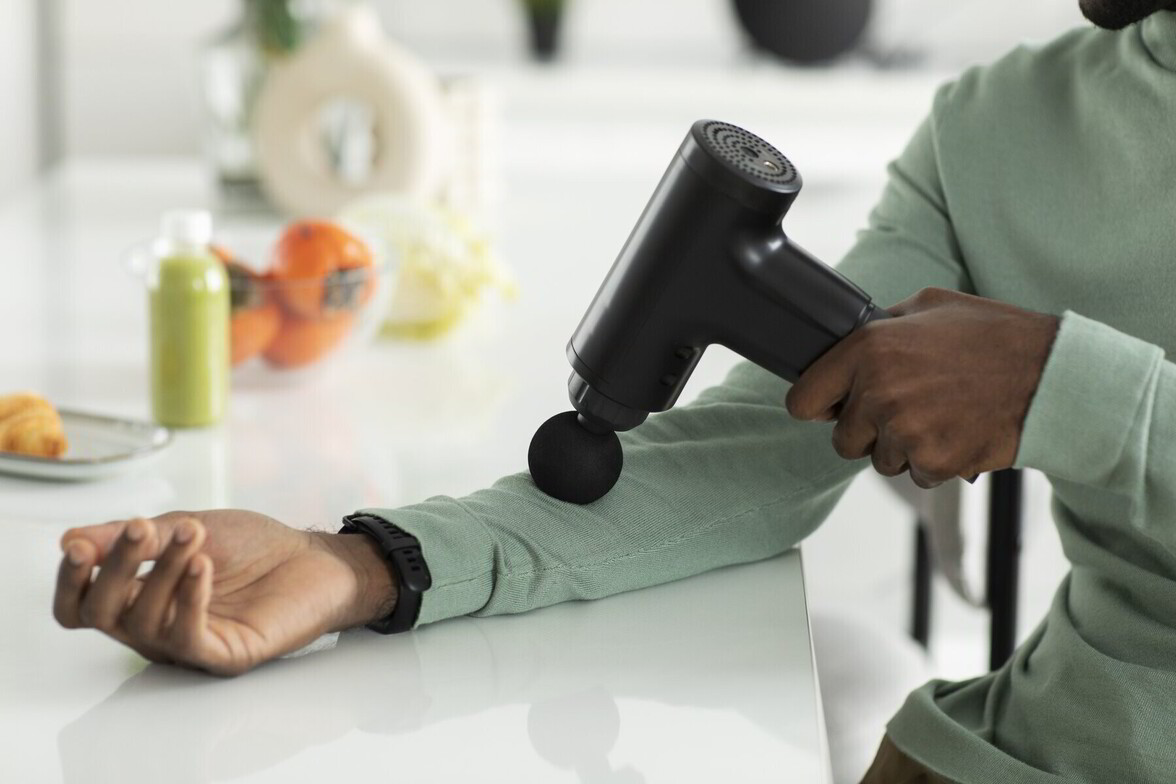
Massage guns, sometimes called percussion massagers, use repeated mechanical movements to stimulate soft tissue. The sensation can feel similar to a deep massage, particularly when used on larger muscle groups. People commonly use massage guns before or after exercise, following long periods of sitting, or when they experience temporary muscle tightness.
Some research suggests that percussion therapy may temporarily improve flexibility and range of motion while reducing the perception of muscle soreness. These effects may make massage guns useful for people who want a convenient way to incorporate movement and recovery into their daily routine. However, more pressure does not necessarily mean better results. Using excessive force or spending too much time on one area may increase soreness rather than improve recovery.
Can Massage Guns Help With Muscle Soreness?
Delayed-onset muscle soreness, commonly called DOMS, can develop after unfamiliar or strenuous physical activity. It may cause temporary tenderness, stiffness, and reduced range of motion. Massage and other forms of soft tissue stimulation may help some people manage the sensation of soreness. A massage gun can be particularly convenient because it allows users to target larger muscle groups without needing an appointment.
However, a massage gun does not instantly repair damaged muscle tissue. Recovery still depends on adequate rest, hydration, nutrition, sleep, and appropriately progressing physical activity. If soreness is severe, persistent, or accompanied by swelling or significant weakness, it is important to consider whether something more than normal post-exercise soreness may be occurring.
What Does a Foam Roller Actually Do?
Foam rolling is often described as a form of self-myofascial release. It involves using a cylindrical foam roller to apply controlled pressure to muscles and surrounding soft tissues. Many people use foam rollers on their thighs, calves, glutes, upper back, and other areas after exercising.
Foam rolling may temporarily improve flexibility and range of motion and can provide a sensation of reduced muscle tightness. It can also encourage people to move through areas that feel restricted. However, foam rolling does not literally "break up" scar tissue or physically reshape muscles in the way some marketing claims suggest. Its benefits are more likely related to changes in pain perception, muscle sensitivity, and short-term mobility.
Massage Gun vs. Foam Roller: Which Is Better?
Neither tool is universally better. The right choice depends on your goals, comfort level, and the area you're trying to address. A massage gun offers targeted percussion and can be convenient for reaching individual muscle groups. A foam roller provides broader pressure and can be particularly useful for larger areas such as the thighs, calves, and upper back.
Both may be useful components of a muscle recovery routine when used appropriately. The most important factor is not which product you purchase but how you incorporate recovery into your overall approach to physical health.
Popular Recovery Tools and What They May Help With
Several recovery products are now commonly used by people at home and in gyms. Their usefulness varies depending on the individual and the reason for using them.
- Massage guns: May help temporarily reduce muscle tightness and improve range of motion.
- Foam rollers: Can support short-term flexibility and mobility.
- Massage balls: Useful for applying focused pressure to smaller areas.
- Stretching straps: Can help people perform controlled flexibility exercises.
- Mobility bands: Often used for warm-ups, stretching, and movement exercises.
- Compression products: May be used by some athletes as part of their recovery routines.
- Heat and cold products: Can provide temporary comfort for certain types of muscle soreness.
None of these tools should automatically be considered a treatment for an underlying injury or medical condition.
When Recovery Tools Can Be Helpful
Recovery tools can be particularly useful when incorporated into a broader healthy lifestyle. For example, someone who exercises regularly may use a foam roller after training, perform mobility exercises before a workout, and use a massage gun when certain muscles feel temporarily tight.
Likewise, someone who spends long hours sitting at a desk may benefit from combining regular movement breaks with gentle stretching and mobility work. The key is understanding that recovery should not be limited to a single device. Mobility exercises, strength training, adequate sleep, hydration, nutrition, and physical activity all play important roles in maintaining a healthy body.
What Recovery Tools Cannot Do
One of the biggest misconceptions surrounding massage guns and foam rollers is that they can fix virtually any type of pain. They cannot diagnose the source of pain, correct every movement problem, repair significant injuries, or replace professional care when an underlying condition requires evaluation.
For example, persistent lower back pain, unexplained joint pain, significant swelling, numbness, weakness, or pain following an injury may require professional assessment. Using a recovery tool repeatedly to mask symptoms without addressing the underlying issue could delay appropriate care.
Can You Use a Massage Gun on Your Back?
This is an important consideration because the back contains sensitive anatomical structures. A massage gun should generally be used carefully around the back, and users should avoid directly targeting the spine or other vulnerable areas. Applying aggressive pressure to sensitive structures does not necessarily improve recovery.
If you're experiencing recurring back pain rather than temporary muscle soreness, it is better to determine the underlying cause before relying on a percussion device. A professional evaluation can help distinguish ordinary muscle tension from a condition that requires a different approach.
Common Mistakes People Make With Recovery Tools
Using recovery products incorrectly can reduce their benefits and potentially cause additional discomfort. One common mistake is applying too much pressure. People sometimes assume that a painful sensation means the tool is working, but excessive discomfort is not an indication of effectiveness.
Another mistake is spending too long on one area. Recovery tools should generally be used for controlled periods rather than aggressively targeting the same muscle for extended sessions. People may also use these tools directly over bones, joints, or areas of acute injury. These practices can be inappropriate depending on the circumstances. Following manufacturer instructions and seeking professional guidance when you're unsure can help reduce unnecessary risks.
Recovery Tools and Chiropractic Care
Massage guns and foam rollers can complement a wellness routine, but they serve a different purpose from chiropractic care. Chiropractic professionals evaluate how the spine, joints, muscles, and other parts of the musculoskeletal system function together. Depending on the individual's needs, chiropractic care may involve adjustments, mobility recommendations, therapeutic exercises, posture education, and other conservative approaches.
Someone experiencing recurring back pain, neck pain, muscle tension, joint stiffness, or limited mobility may benefit from an individualized assessment rather than simply treating symptoms with a recovery device. A recovery tool may help you feel temporarily better, while a personalized care plan can address contributing movement patterns and lifestyle factors.
How to Build a Better Recovery Routine
Effective recovery doesn't need to be complicated. Start by identifying what your body needs and choosing tools that support those goals. If you're physically active, prioritize adequate warm-ups, cool-downs, strength training, flexibility, hydration, and sleep. If you spend most of your day sitting, focus on movement breaks, ergonomic adjustments, mobility exercises, and maintaining an active lifestyle.
Recovery tools can then be added where they make sense. The goal should be to improve how your body moves and feels over time rather than relying on a device every time discomfort appears.
When Should You Seek Professional Help?
Occasional muscle soreness after exercise is generally different from persistent or unexplained pain. If discomfort continues despite rest and basic self-care, repeatedly returns, interferes with your daily activities, or follows an injury, professional evaluation may be appropriate.
Symptoms such as significant weakness, numbness, severe swelling, or sudden intense pain should not simply be treated with a massage gun or foam roller. A qualified healthcare professional can help determine what may be contributing to your symptoms and whether additional care is appropriate.
The Bottom Line on Massage Guns and Foam Rollers
Massage guns, foam rollers, and other recovery tools can be useful additions to an active lifestyle. They may provide temporary relief from muscle tightness, support flexibility, and help people feel more comfortable after physical activity. But they are not cure-all solutions.
The most effective approach to muscle recovery, mobility, back health, and injury prevention combines regular movement, proper exercise, good nutrition, quality sleep, and appropriate professional care when needed. Instead of asking whether a massage gun or foam roller "works," the better question is whether it is being used appropriately for your specific needs.
Take the Next Step Toward Better Movement
At Vitality Chiropractic in Keller, TX , we help patients understand the factors that may be contributing to muscle tension, stiffness, limited mobility, and recurring musculoskeletal discomfort. Our personalized chiropractic care focuses on evaluating movement, supporting healthy function, and creating care plans based on each individual's needs.
If you're relying on massage guns, foam rollers, or other recovery tools but continue experiencing back pain, neck pain, muscle tension, joint stiffness, or mobility problems, it may be time to look beyond temporary relief.

Brandi Barker
Contact Me