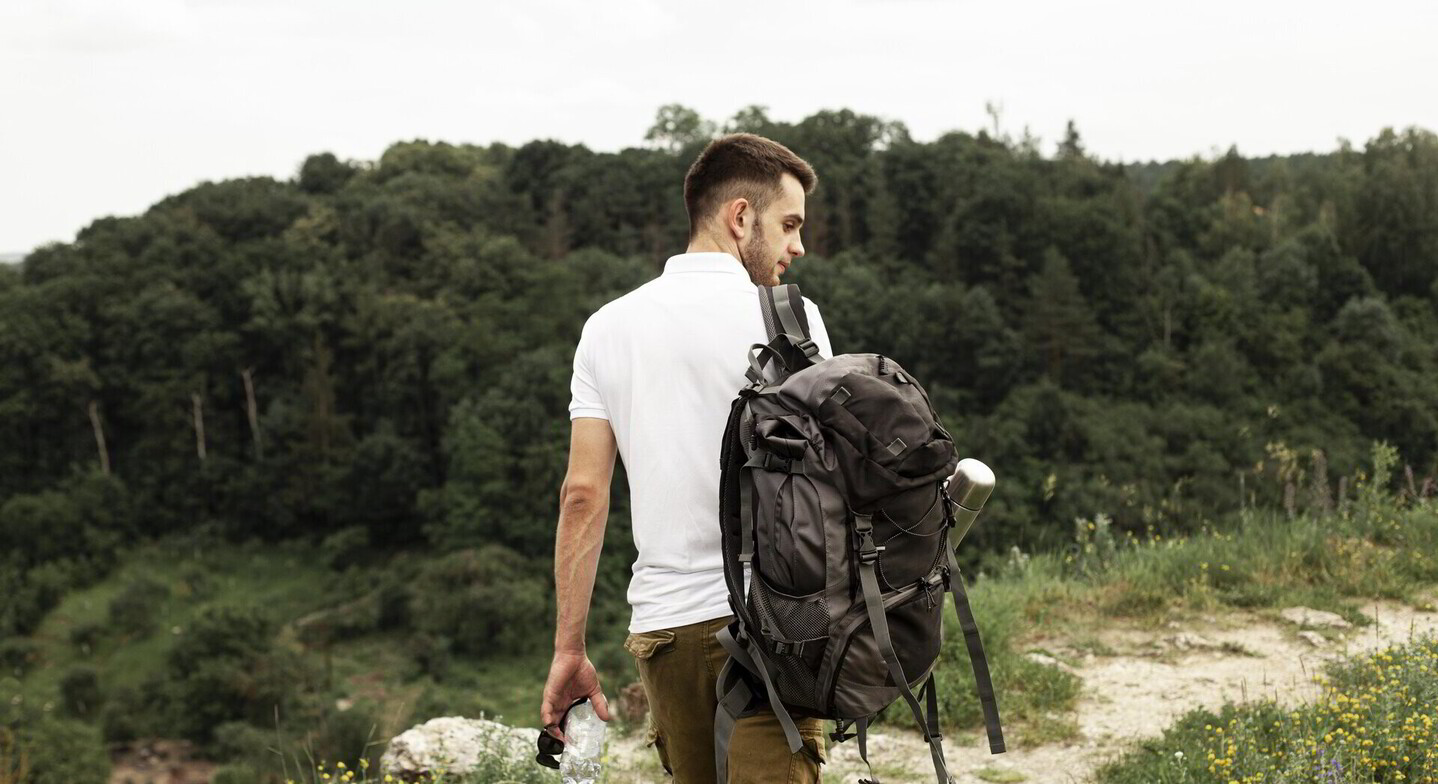
How Does a Heavy Bag Affect Your Posture?
Your body naturally works to maintain balance when you carry an external load. When a bag pulls your body backward, forward, or to one side, your muscles may compensate to keep you upright. For example, a heavy backpack can pull the shoulders backward or downward. A purse carried on one shoulder can cause you to raise or rotate that shoulder to prevent the strap from slipping.
These adjustments may not feel significant at first. However, repeating the same movement pattern every day can place additional stress on certain muscles and joints. Poor posture does not necessarily cause pain by itself, but prolonged awkward positioning can contribute to muscle fatigue and discomfort, particularly when combined with prolonged sitting, computer use, or other repetitive activities.
Can Carrying a Heavy Purse Cause Neck and Shoulder Pain?
Neck and shoulder pain are common complaints among people who regularly carry heavy bags. A purse that hangs from one shoulder creates an uneven load. The muscles around the shoulder and upper back have to work to stabilize the weight. If the bag is heavy or carried for long periods, these muscles may become fatigued or tense. Some people may also unconsciously tilt their head or lean their torso to compensate for the weight.
This can become especially noticeable when combined with other everyday factors such as working at a desk, looking down at a smartphone, or spending long periods driving. If you frequently experience neck stiffness, shoulder tension, upper back discomfort, or headaches, it may be worth considering how you carry your daily belongings as one part of the bigger picture.
Why Back Pain Can Be Related to Your Bag
Your spine is designed to distribute forces throughout the body. Adding weight changes the demands placed on your muscles and joints. A heavy backpack may alter the way you stand and walk. If the load is positioned too low or too far away from your body, your muscles may need to work harder to maintain balance. Similarly, carrying a heavy purse on one side can encourage an uneven posture.
This does not mean that every person who carries a heavy bag will develop back pain. Musculoskeletal discomfort is influenced by many factors, including physical conditioning, activity level, previous injuries, ergonomics, sleep, stress, and overall movement patterns. However, reducing unnecessary load and improving how you carry your belongings can be a simple step toward supporting better spinal health.
Backpacks Are Not Just for Children
Backpack-related posture concerns are often discussed in relation to school-aged children, but adults can experience similar issues. Students, commuters, travelers, healthcare workers, office employees, and people who carry laptops or equipment may wear backpacks for several hours each day.
An adult backpack may contain a laptop, charger, water bottle, notebooks, clothing, lunch, and other items. When all of these are combined, the total load can become surprisingly heavy. The same principles apply regardless of age: the heavier the load and the longer it is carried, the more important proper distribution and fit become.
How to Carry a Backpack More Comfortably
The way a backpack fits can make a significant difference. A properly fitted backpack should sit comfortably against your back rather than hanging far away from your body. Using both shoulder straps is generally preferable to wearing the backpack over one shoulder. Both straps help distribute the weight more evenly and reduce the need for your body to compensate for an uneven load.
The backpack should also be adjusted so that it does not hang excessively low. When possible, heavier items should be positioned closer to your back. This can reduce the leverage created by carrying weight farther away from your body.
Simple Ways to Reduce the Strain From Your Bag
Small changes can make everyday carrying more comfortable and may reduce unnecessary stress on your muscles and joints.
- Remove items you do not need to carry every day.
- Use both backpack straps instead of carrying a backpack on one shoulder.
- Adjust shoulder straps so the backpack sits securely against your back.
- Place heavier items closer to your body.
- Avoid carrying an excessively heavy purse on one shoulder for long periods.
- Consider switching shoulders if you must carry a single-strap bag.
- Use bags with wider, comfortable straps when possible.
- Take breaks from carrying your bag during long trips.
- Consider a rolling bag when transporting particularly heavy items.
- Pay attention to new or persistent pain rather than simply pushing through it.
These changes are especially useful for people who commute, travel, attend school, or work in environments where carrying equipment is unavoidable.
Can a Heavy Purse Affect One Side of Your Body?
One-sided carrying can create an uneven distribution of weight. When a purse consistently hangs from the same shoulder, you may naturally elevate that shoulder, lean away from the load, or shift your posture. Over time, this repeated pattern can contribute to muscle fatigue or tension.
Switching sides periodically can help distribute the load, but reducing the overall weight may be even more helpful. If you notice that one shoulder, side of your neck, or upper back regularly feels tighter than the other, consider whether your daily habits could be contributing. Your bag is only one possible factor, but everyday repetitive movements can add up.
What About Heavy School Backpacks?
Children and teenagers often carry backpacks filled with textbooks, laptops, sports equipment, and school supplies. A backpack that is too heavy or poorly fitted may contribute to discomfort in the shoulders, neck, and back. Parents can help by regularly checking what their children are carrying and removing unnecessary items.
Children should also be encouraged to use both shoulder straps and adjust their backpack properly. If a child frequently complains of back pain, neck pain, shoulder discomfort, numbness, or difficulty carrying their backpack, parents should take those complaints seriously and consider discussing them with an appropriate healthcare professional.
Your Bag May Not Be the Only Cause of Back or Neck Pain
It is important to avoid blaming every episode of pain on a purse or backpack. Musculoskeletal health is influenced by a combination of lifestyle factors. A person who carries a heavy bag while also spending eight hours sitting at a desk, using a smartphone frequently, exercising inconsistently, or sleeping poorly may experience discomfort from several contributing factors.
For example, prolonged sitting can affect movement habits and contribute to stiffness. Poor workstation ergonomics may place additional demands on the neck and shoulders. A sudden increase in exercise can also create muscle soreness. Looking at your overall movement patterns can therefore be more useful than focusing on a single habit.
When Should You Get Professional Guidance?
Occasional muscle fatigue after carrying something heavy is generally different from persistent or worsening pain. If you experience ongoing neck pain, shoulder pain, back pain, numbness, tingling, weakness, headaches associated with neck discomfort, or pain that interferes with normal activities, professional evaluation may be appropriate.
A qualified healthcare professional can assess your symptoms, movement patterns, and individual circumstances and determine whether further evaluation or treatment is needed. Chiropractic care may be one option people consider for certain musculoskeletal concerns. Depending on the individual, a chiropractor may evaluate spinal movement, posture, mobility, and other factors that could be contributing to discomfort. The appropriate approach depends on the cause and severity of the symptoms.
Protect Your Musculoskeletal Health With Better Everyday Habits
You do not necessarily need to stop carrying a purse or backpack to protect your back and neck. The goal is to be mindful of how much you carry, how you distribute the weight, and how long you carry it. Combining better bag habits with regular movement, strength training, mobility exercises, proper workstation ergonomics, and good posture awareness can support overall musculoskeletal health.
Your everyday habits matter because small stresses repeated hundreds of times can become more noticeable over time. Making a few simple adjustments today may help you move more comfortably throughout your day.
Book a Consultation for Better Musculoskeletal Health
If you regularly experience back pain, neck pain, shoulder pain, muscle tension, stiffness, or posture-related discomfort, it may be helpful to look beyond your bag and consider your overall movement and musculoskeletal health. Vitality Chiropractic in Keller, TX can help you understand your individual concerns and explore appropriate options for improving comfort and mobility. Contact today to book a consultation or wellness session and take the next step toward healthier movement and better everyday function.

Brandi Barker
Contact Me