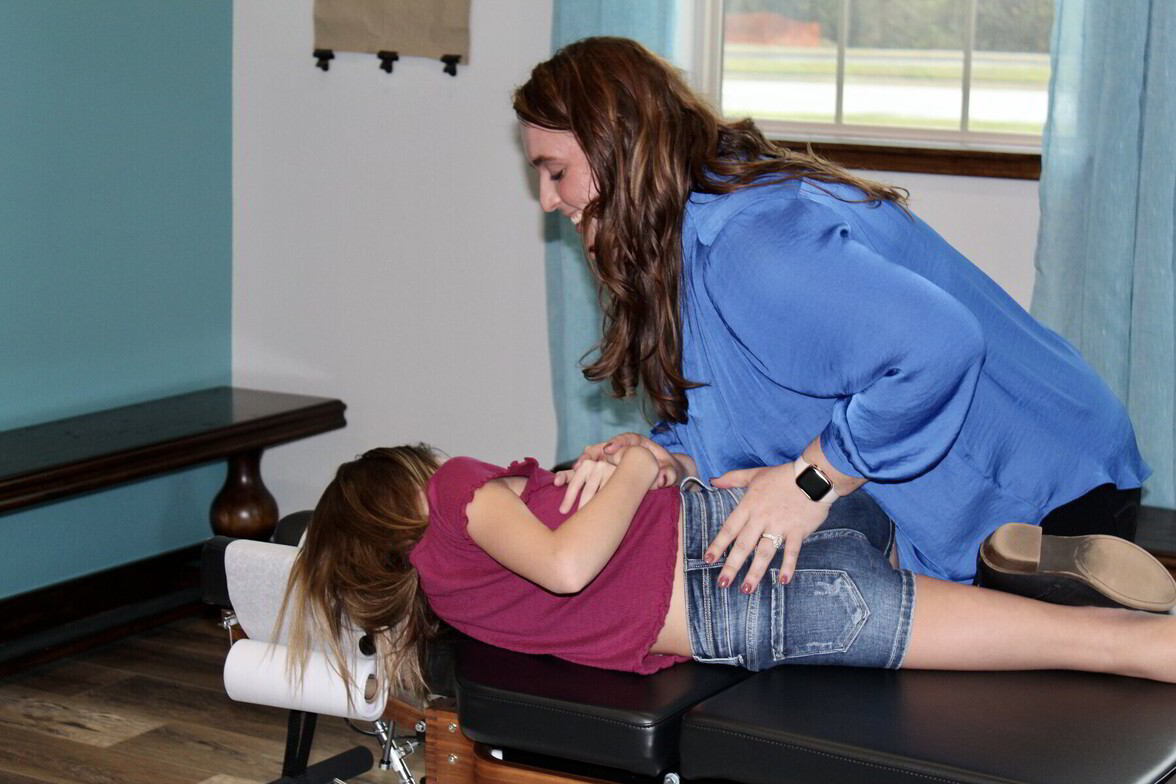
Why Does Your Back Crack?
The spine is made up of individual vertebrae connected by joints, discs, ligaments, and muscles. Small joints between the vertebrae, called facet joints, help your spine bend, rotate, and move. When you stretch or move your spine, pressure within these joints can change. This can result in a popping or cracking sound. The sound isn't necessarily coming from your bones rubbing together. In many cases, it is associated with changes in pressure within the joint and the surrounding tissues.
You may also hear clicking, popping, or snapping sounds from tendons and ligaments moving as you change position. Therefore, hearing a crack does not automatically mean that something was wrong with your spine beforehand or that you have successfully corrected a spinal problem afterward.
Why Does Cracking Your Back Feel So Good?
Many people experience a feeling of relief after cracking their back. That sensation can be real, even if the crack itself isn't necessarily "fixing" an underlying problem. Movement of the joints can temporarily change how the surrounding muscles and nervous system perceive tension. Stretching and changing position can also make an area feel less restricted. For someone who has been sitting at a desk for several hours, for example, standing up and gently moving the spine may feel refreshing.
The relief may come from the movement and change in sensation rather than the popping sound itself. This is one reason people may develop a habit of repeatedly cracking their back whenever they experience stiffness.
Does Cracking Your Back Realign Your Spine?
One of the most common misconceptions about back cracking is that the sound means a vertebra has moved back into its proper position. Your spine is not typically a collection of bones that randomly move out of place and need to be cracked back into alignment. Spinal movement is much more complex. Muscles, joints, ligaments, discs, posture, movement patterns, and nervous system function all contribute to how your body moves.
A popping sound by itself cannot tell you whether your spine is properly aligned or whether an underlying musculoskeletal issue has been corrected. If you consistently feel like you need to crack your back to become comfortable, it may be worth looking at why you're experiencing that recurring stiffness in the first place.
Is It Bad to Crack Your Back?
For many healthy people, occasional gentle back cracking is not necessarily harmful. However, deliberately forcing your spine into extreme positions or repeatedly manipulating it with excessive force is a different matter. The biggest concern isn't necessarily the occasional pop. It is the habit of aggressively twisting or manipulating the body to repeatedly produce a cracking sound, particularly when pain is already present.
If you constantly feel the need to crack your back, the habit may be masking an underlying issue such as prolonged sitting, muscle tension, limited mobility, poor movement habits, or another musculoskeletal concern. Rather than focusing on producing a crack, it is generally more useful to focus on improving mobility, strength, posture, and overall movement.
Signs You May Be Cracking Your Back Too Often
Occasional cracking isn't necessarily a problem. However, recurring discomfort or dependence on self-manipulation deserves more attention.
Some signs that you may benefit from professional evaluation include:
- You feel like you need to crack your back repeatedly throughout the day.
- You experience persistent or worsening back pain.
- Cracking provides only temporary relief before discomfort returns.
- You experience numbness, tingling, or weakness.
- You have recently experienced a fall, accident, or other injury.
- You are using significant force to make your back pop.
- Your range of motion has noticeably decreased.
- Back stiffness is interfering with work, exercise, sleep, or everyday activities.
These symptoms don't necessarily indicate a serious condition, but they are reasons to look beyond the popping sound and consider what may be contributing to your discomfort.
Cracking Your Back vs. Chiropractic Adjustments
Another common question is whether cracking your own back is the same as receiving a chiropractic adjustment. It isn't.
A chiropractic adjustment is a controlled technique performed by a trained professional after evaluating the patient's individual needs. Chiropractors consider factors such as joint mobility, posture, movement patterns, medical history, and symptoms when determining whether an adjustment is appropriate. The goal isn't simply to make the spine crack.
Instead, chiropractic care focuses on supporting healthy movement and musculoskeletal function. Some chiropractic techniques may produce a popping sound, while others may not. An adjustment can be performed without an audible crack, meaning the sound itself is not the measure of whether care was effective.
Why You May Feel Stiff in the First Place
If you regularly feel the urge to crack your back, consider what happens before the stiffness appears. For many people, prolonged sitting is a major factor. Spending hours at a desk, driving, working on a computer, or looking at a phone can limit movement and cause muscles to remain in relatively static positions.
Other factors can include an inactive lifestyle, repetitive movements, intense exercise, inadequate recovery, poor workstation ergonomics, and changes in physical activity. Stress can also contribute to muscle tension, which may make the body feel stiff or uncomfortable. Understanding these contributing factors is often more valuable than simply trying to make the back pop.
Movement May Be Better Than Repeated Cracking
If your back feels stiff, gentle movement may be a better first step than forcefully twisting until you hear a crack. Walking, stretching, changing positions, performing mobility exercises, and taking regular movement breaks can all help reduce the effects of prolonged inactivity.
For people who work at a desk, getting up periodically throughout the day can help break up long periods of sitting. Maintaining a regular exercise routine that includes strength, flexibility, and mobility can also support healthy spinal function. The objective isn't to eliminate every pop or click. The human body naturally makes sounds during movement. Instead, the goal is to maintain comfortable, functional movement.
What About Cracking Your Neck?
The same principles apply to neck cracking, but extra caution is important because the neck contains sensitive structures. Forcefully manipulating the neck or repeatedly twisting it to produce a popping sound isn't a substitute for addressing persistent neck pain or stiffness.
If you regularly experience neck pain, headaches, reduced mobility, or tension, consider having the underlying problem evaluated rather than repeatedly attempting to crack the area yourself. A healthcare professional can help determine whether your symptoms are related to posture, muscle tension, joint mobility, an injury, or another issue.
Can Chiropractic Care Help With Back Stiffness?
Chiropractic care is commonly used as a conservative approach to back pain, spinal health, joint mobility, and musculoskeletal wellness. During an evaluation, a chiropractor may assess posture, spinal movement, joint mobility, muscle function, and other factors that could contribute to discomfort.
Depending on the individual's needs, care may involve spinal adjustments, mobility exercises, stretching recommendations, ergonomic guidance, strengthening exercises, and other conservative strategies. The focus is not simply on making the back crack. Instead, chiropractic care aims to support healthy movement and help patients better understand their individual musculoskeletal health.
When Should You Stop Cracking Your Back and Seek Care?
If cracking your back is painless and occasional, it may not be something you need to worry about. However, persistent pain should not be ignored simply because cracking provides temporary relief.
Professional evaluation may be appropriate if your symptoms are worsening, recurring frequently, or affecting your normal activities. Back pain accompanied by significant weakness, numbness, tingling, loss of coordination, or symptoms following an injury also deserves prompt medical attention. The important distinction is between an occasional harmless joint sound and using repeated manipulation to manage an unresolved problem.
Healthy Habits for Better Spinal Health
Your spine benefits from regular movement and healthy lifestyle habits throughout the day. Maintaining an active lifestyle, strengthening the muscles that support your body, practicing good posture, taking movement breaks, maintaining a healthy weight, getting adequate sleep, and using an ergonomic workstation can all contribute to better overall musculoskeletal health.
If you spend most of your day sitting, even small changes can make a difference. Stand during phone calls, walk during breaks, stretch between tasks, and avoid remaining in one position for hours at a time. These habits may reduce the urge to constantly crack your back simply because your body has more opportunities to move naturally.
The Bottom Line: Do You Really Need to Crack Your Back?
Probably not. Your back does not need to crack in order to be healthy, and the popping sound does not necessarily mean that something has been realigned or repaired. Occasional, gentle self-cracking may provide temporary relief for some people, but repeatedly forcing your back to pop isn't a long-term solution for persistent stiffness or pain.
If you constantly feel the need to crack your back, consider asking a more important question: Why does my back keep feeling stiff in the first place? Addressing movement habits, posture, physical activity, mobility, and underlying musculoskeletal concerns can provide a more meaningful approach to long-term back pain relief and spinal wellness.
Take the Next Step Toward Better Spinal Health
At Vitality Chiropractic in Keller, TX , we help patients understand the factors that may be contributing to back stiffness, discomfort, restricted mobility, and recurring musculoskeletal concerns. Through personalized chiropractic evaluations and individualized care, our goal is to support healthy movement and long-term spinal wellness.
If you constantly feel the need to crack your back, experience recurring back pain or stiffness, or simply want to better understand your spinal health, our team can help you determine whether chiropractic care may be appropriate for your needs.

Brandi Barker
Contact Me